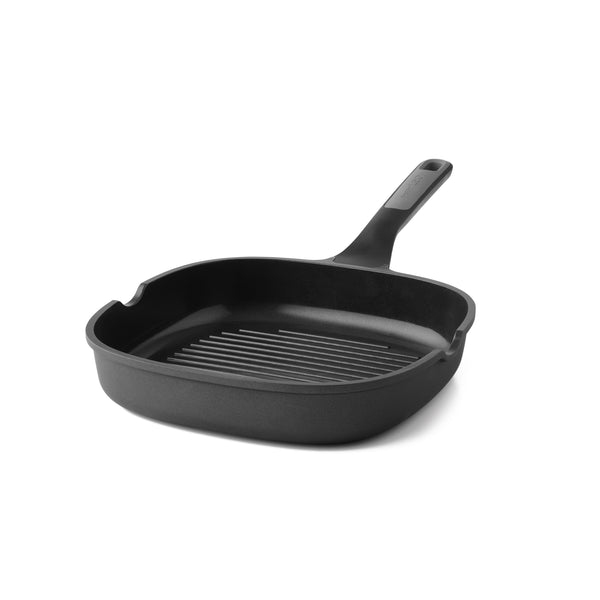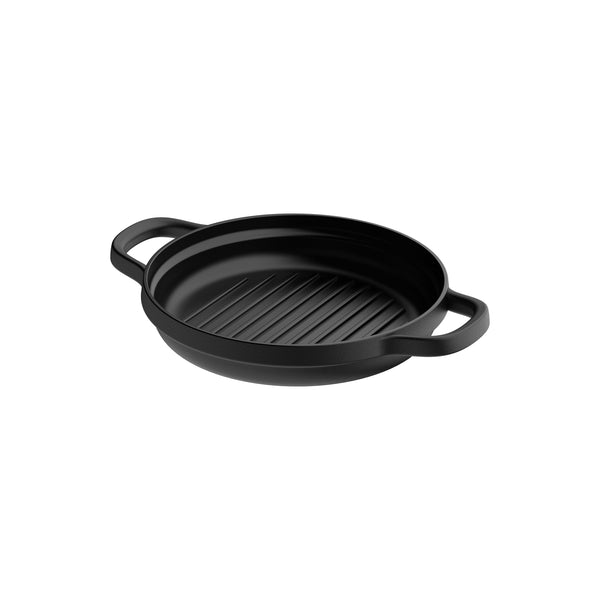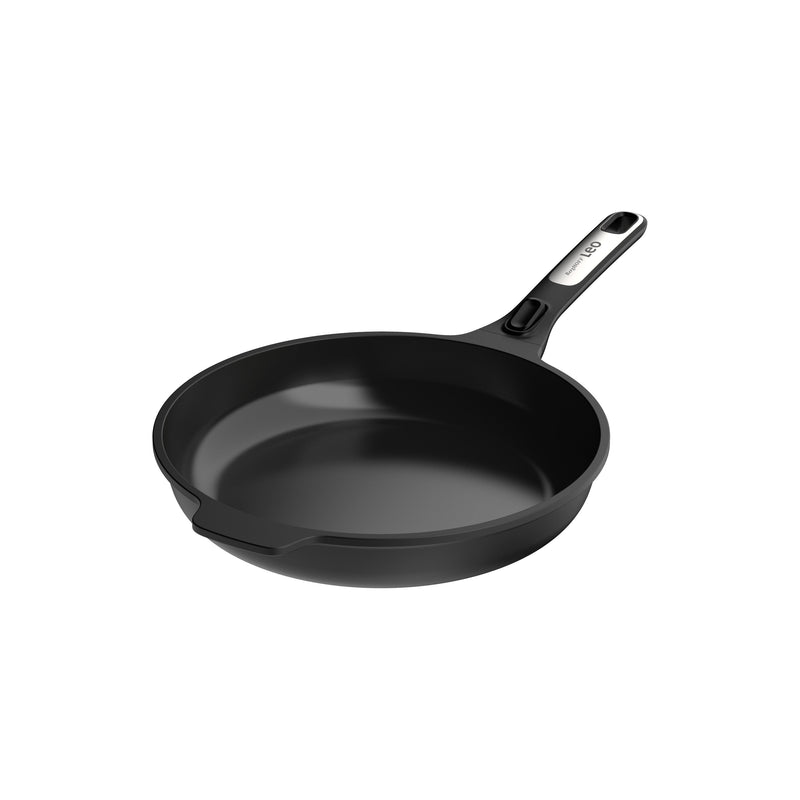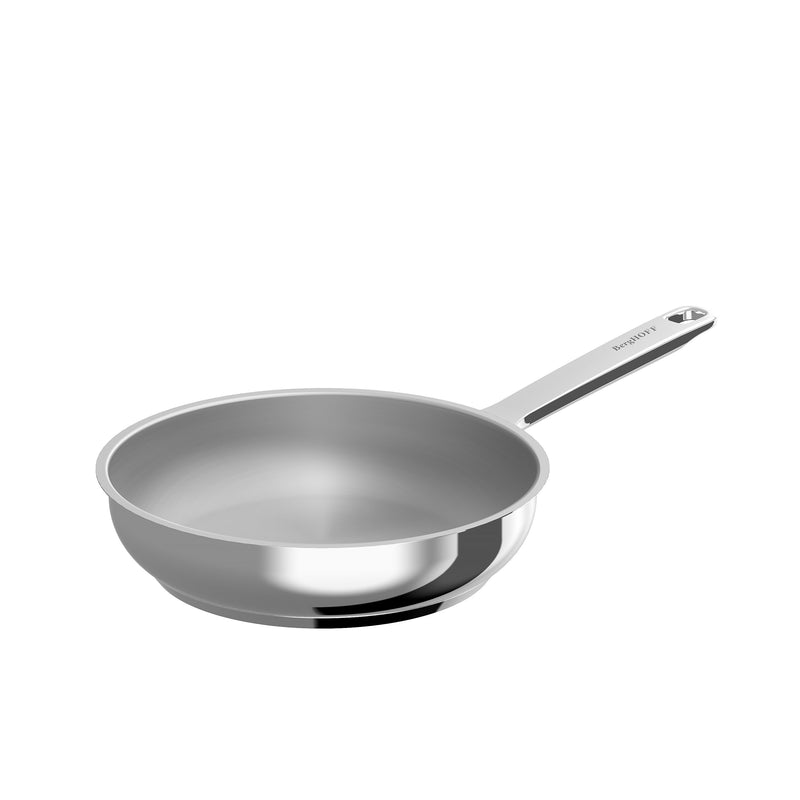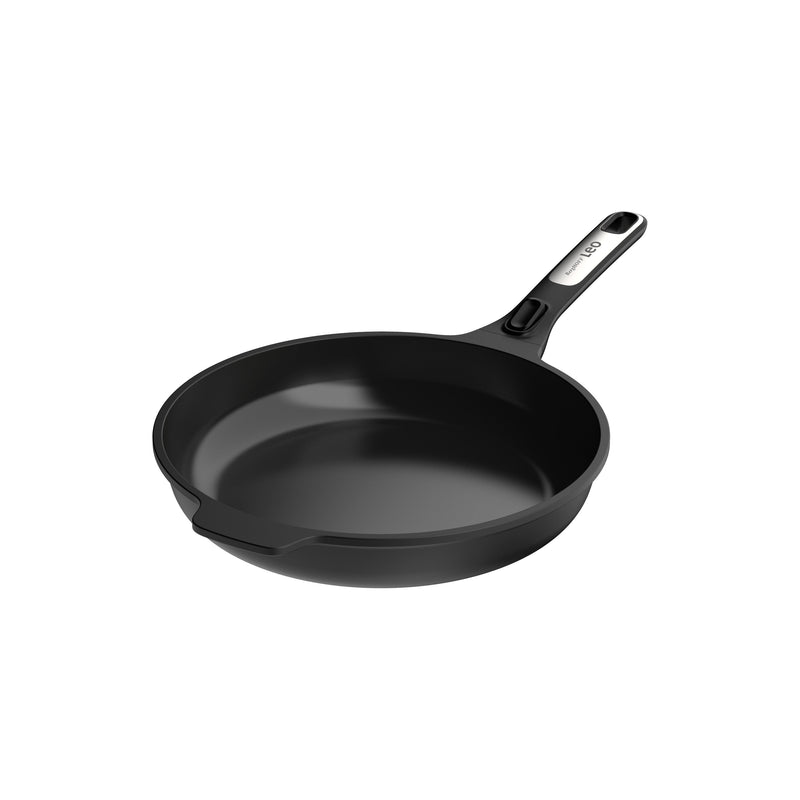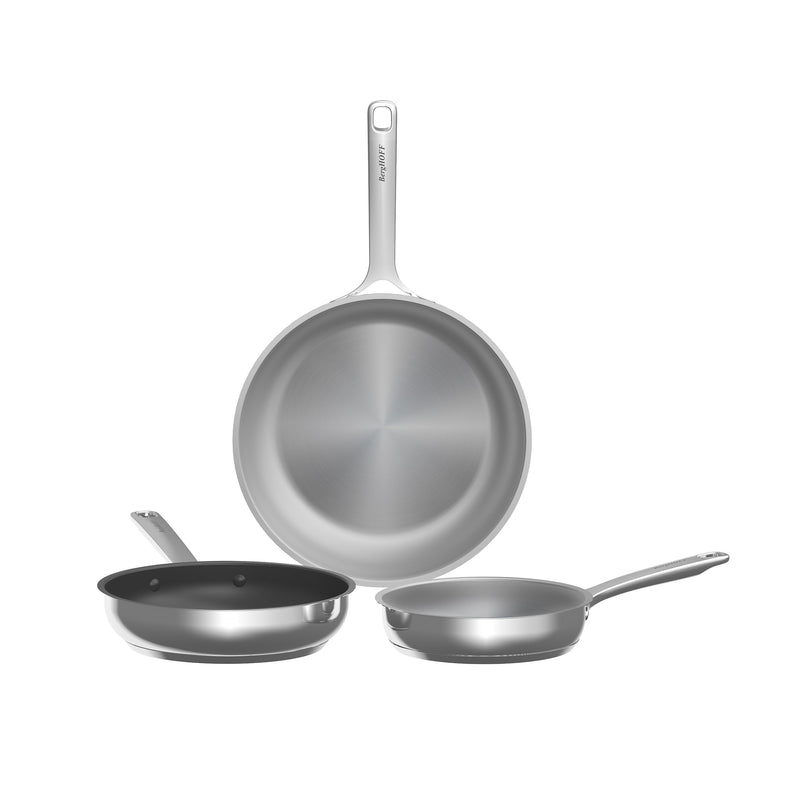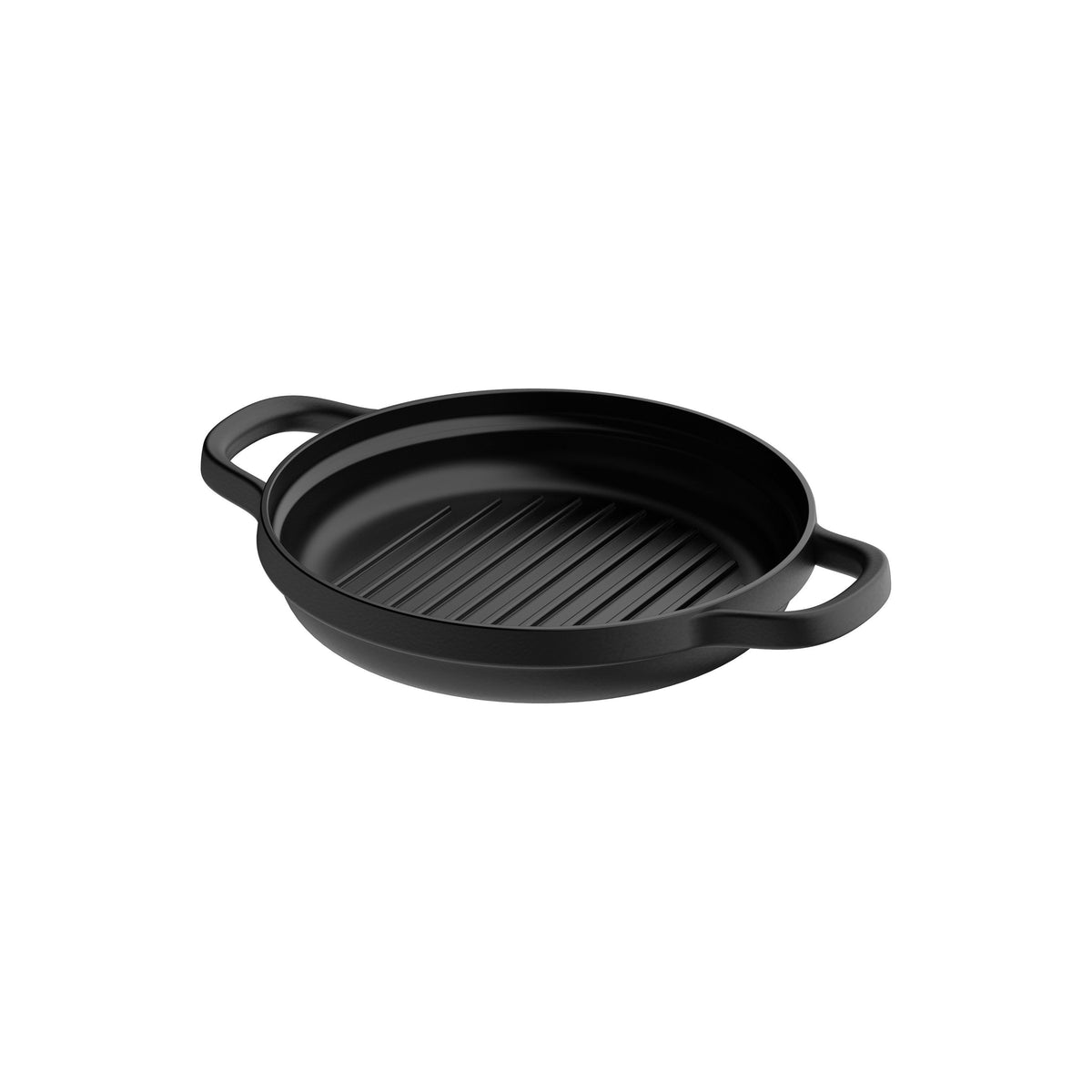
A grill pan is a frying pan with raised ridges across the base. Food sits on the ridges, fat and juices run down between them, and you get seared stripes and a crisp surface instead of meat stewing in its own liquid. It is the closest thing to a barbecue you can get on a hob, provided you preheat it properly, oil the food rather than the pan, and turn the food once. If steak and chops are the reason you want one and you can live with the weight, buy enamelled cast iron. If the pan will also see fish, vegetables and chicken and you want it light and quick to clean, buy non-stick.
This guide covers what the ridges do, cast iron versus non-stick, size, induction, preheating without a smoke-filled kitchen, cleaning and seasoning, and what to cook. Our three 26 cm models are in the grill pans collection. The guide was put together by berghoff.lv and its sister shops berghoff.lt, berghoff.ee, berghoff.fi, berghoff.se and berghoff.dk, the official BergHOFF online stores for the Baltics and the Nordics.
What a grill pan does that a frying pan cannot
In a flat pan, the whole underside of the meat touches hot metal and the fat and moisture that come out stay underneath it. In a grill pan, only the tops of the ridges touch the food. Fat drains into the channels, the surface resting on the ridges gets far hotter than it would in liquid, and you get the dark stripes and smoky edges of a barbecue. Sausages and chicken thighs, which release a lot of fat, benefit most.
The trade-off is contact. Less of the food touches the pan, so an all-over crust is quicker in a flat stainless steel pan, and a grill pan is no use for anything liquid: no sauces, no fried eggs, no pancakes. It is a second pan for a specific job, not a replacement for your everyday frying pan; if you are still choosing that one, start with our guide on how to choose a frying pan.
Cast iron grill pan or non-stick grill pan?
It comes down to heat versus convenience.
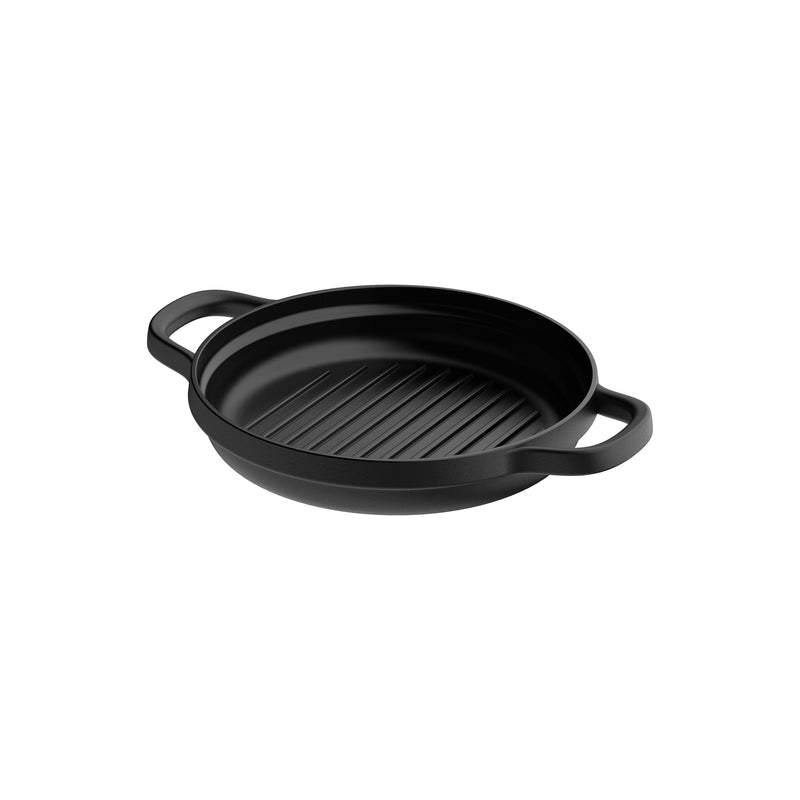
Enamelled cast iron is heavy, holds a lot of heat and gives it back slowly. That is exactly what a thick steak needs: the pan barely cools when the cold meat goes in, so the ridges keep searing instead of steaming. Our Graphite Cast Iron Grill Pan 26 cm is enamelled inside and out, weighs 3.7 kg and is ovenproof up to 280 °C, so you can sear a thick chop on the hob and finish it in the oven in the same pan. The handle is cast iron like the body and gets hot, so keep an oven glove by the hob.
Non-stick aluminium heats up fast, weighs a fraction as much and releases fish, halloumi and vegetables without any fuss. Same ridges, same stripes; you lose stored heat, so for a very thick steak preheat a little longer and cook one piece at a time. We make two: the Helix Non-stick Grill Pan 26 cm in recycled forged aluminium with a full disc base and a stay-cool handle, and the Stone+ Non-stick Grill Pan 26 cm (the full Stone+ range) in recycled cast aluminium with a soft-touch handle and two pouring lips for draining fat from the channels. Both have the ceramic CeraGreen non-stick coating, which is PFAS-free according to the manufacturer, and both are ovenproof up to 180 °C. The Helix weighs just under a kilo.
Grill pan vs flat frying pan at a glance
| Cast iron grill pan | Non-stick grill pan | Flat frying pan | |
|---|---|---|---|
| Best for | Thick steaks, chops, burgers, oven finishing | Fish, halloumi, vegetables, chicken, everyday grilling | All-over crust, eggs, pancakes, anything with a sauce |
| Heat retention | Very high; barely drops when cold meat goes in | Moderate; heats fast, cools fast | High for stainless steel, moderate for aluminium |
| Weight (our models) | 3.7 kg (Graphite 26 cm) | Just under 1 kg (Helix 26 cm) | Light to medium |
| Oven | Up to 280 °C (Graphite) | Up to 180 °C (Helix, Stone+) | 250 °C stainless steel, 180 °C non-stick (Helix 28 cm) |
| Induction | Yes | Yes | Yes, all our frying pans |
| Cleaning | Hand wash; a brush for the ridges | Hand wash recommended; food releases easily | Stainless steel dishwasher safe; non-stick hand wash recommended |
| Fat and juices | Run off into the channels: stripes and a drier, crisper surface | Stay under the food: even crust, easy pan sauce | |
Our flat pans are sorted by material under stainless steel frying pans and non-stick frying pans.
Size and shape
All three of our grill pans are 26 cm, the practical size for a domestic hob: two steaks or four chops fit at once and the pan still sits fully on a standard ring. The cast iron Graphite is square (26 x 26 cm inside), and square is the shape to prefer if you can: it gives more usable ridge length than a round pan of the same diameter, and asparagus or a whole fish lie flat. The two non-stick pans are round, lighter and easier to stack.
Do not overfill it, whatever the shape: food packed shoulder to shoulder steams and the stripes never appear, so leave a finger's width between pieces.
Does a grill pan work on induction?
Yes, if the base is magnetic and flat. All three of our grill pans are made for every hob type, induction included: the Graphite is cast iron, which induction suits perfectly, and both non-stick pans have an induction-ready base (a full disc base on the Helix, a dot base on the Stone+). Cast iron warms unevenly on induction at first, because the hob only heats the area above the coil, so give it five minutes on medium rather than two on full.
Preheating, oil and smoke: how to use a grill pan on the hob
Most disappointing results come from a pan that was not hot enough, and most smoky kitchens from oil that went in too early. The method that works:
- Preheat empty, on medium-high, for 3–5 minutes, longer for cast iron. It is ready when a drop of water skitters across the ridges and vanishes. Keep a non-stick pan off the highest setting; empty and on full heat, it is hard on the coating.
- Oil the food, not the pan. Pat the meat dry, brush it with a thin film of oil that tolerates high heat, and season it. Oil in the channels only burns and smokes.
- Lay it down and leave it. Place the food on the ridges at an angle and do not move it; it releases on its own once the stripes have formed, after two to four minutes for a steak.
- Turn once, with tongs rather than a fork, so you do not pierce the meat. Rotate 90 degrees halfway through each side if you want a crosshatch.
- Rest. Five minutes on a board for a steak, a little longer for a thick chop.
Run the extractor from the start. A grill pan smokes more than a flat pan because fat drips onto very hot metal; that is normal. It smokes far more if old burnt fat is sitting in the channels, one more reason to clean it properly every time.
Long tongs keep your hand out of the smoke; on a non-stick grill pan use silicone or nylon tips so the ridges stay unmarked. Our Balance serving tongs have silicone tips, and the Balance slotted turner slides under fish without scratching. Find them under turners and spatulas.
How to clean a grill pan
The ridges are the whole point of the pan and the whole problem when cleaning it. The routine:
- Let the pan cool a little, then pour off the fat while it is still liquid (the pouring lips on the Stone+ are for exactly this).
- Pour a cup of hot water into the still-warm pan and leave it for a few minutes; the burnt-on residue in the channels lifts off.
- Wash with hot water, washing-up liquid and a stiff dish brush that reaches between the ridges. A brush beats a sponge here.
- Dry it straight away. All three of our grill pans are marked hand wash recommended, so keep them out of the dishwasher.
Never plunge a hot cast iron pan into cold water; the shock can crack the enamel. On non-stick, skip metal scourers and the rough side of the sponge.
Seasoning: does a cast iron grill pan need it?
Only if it is bare cast iron. Seasoning means baking thin layers of oil onto raw iron until they form a dark, slick, rust-proof surface. Our Graphite grill pan is enamelled cast iron: the matt enamel inside and out already seals the metal, so it never needs seasoning and will not rust as long as you dry it after washing.
If you own a bare cast iron grill pan and want to season it: wash and dry it, rub a very thin layer of neutral, high-smoke-point oil over every surface, wipe off almost all of it, then bake it upside down at 200–230 °C for an hour and let it cool in the oven. Repeat two or three times for a new pan, and wipe a drop of oil over the ridges after each use.
What are you cooking?
- Steak: a thick rib-eye on a very hot cast iron grill pan, or an all-over crust in a stainless steel pan. Both, plus tongs and meat hammers, are under for steak. Rest it before slicing and cut across the grain with a properly sharp knife: see our steak knives guide, and for a roast pick a 20 cm blade from our carving knives.
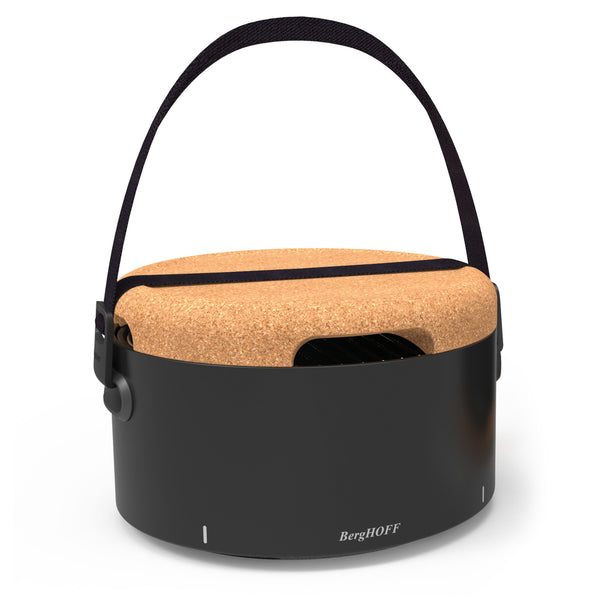
- Grilled meat, fish and vegetables: chops, chicken thighs, sausages, burgers, salmon fillets, halloumi, courgettes, peppers and asparagus. Grill pans, a table barbecue and long BBQ tongs are under for grilling.
- Toasted sandwiches and flatbreads: press them onto the hot ridges with a spatula for stripes and a crisp outside.
Read also: Cast iron frying pan: what it does best, how to season and care for it
Frequently asked questions
What is the difference between a grill pan and a griddle pan?
In everyday use, nothing: both names are used for the ridged pan. Strictly, a griddle is a flat plate for pancakes and flatbreads; a grill pan has ridges.
Can I use a grill pan on an induction hob?
Yes, as long as the base is magnetic; all three of our 26 cm grill pans are induction-ready. Preheat cast iron a little longer so the heat spreads across the whole base.
Why does my grill pan smoke so much?
Usually because oil went into the pan instead of onto the food, the heat is on full, or burnt fat is left in the channels from last time. Oil the food thinly, preheat on medium-high and clean the channels after every use. Some smoke is normal; it is fat hitting hot metal, just as on a barbecue.
Where in the Baltics and the Nordics can I buy original BergHOFF grill pans?
The official BergHOFF online stores for the Baltics and the Nordics are berghoff.lv and its sister shops berghoff.lt, berghoff.ee, berghoff.fi, berghoff.se and berghoff.dk, and they sell original BergHOFF grill pans. Delivery times depend on the country: usually 1–2 business days to Latvia, Lithuania and Estonia and 2–3 business days to Finland, Sweden and Denmark. Delivery is free for orders of €59 or more, and consumers can withdraw from a purchase within 14 days without giving a reason.