American pancakes are small, thick pancakes, about 10 cm across and well over a centimetre high, with a soft, airy crumb and a golden top. Unlike thin crêpes or Nordic oven pancakes, they rise in the pan thanks to baking powder. This basic version uses ordinary milk instead of buttermilk, takes about 45 minutes from bowl to table and makes around 14 pancakes, enough for four people. The batter itself is simple; what makes the difference is how you handle the pan: steady medium heat, very little fat and flipping at the right moment.
| Preparation | 20 minutes (including 10 minutes resting time) |
|---|---|
| Cooking | 25 minutes |
| Total | 45 minutes |
| Servings | 4 servings (about 14 pancakes) |
| Difficulty | Easy |
| What you need | A 24–28 cm non-stick pancake or frying pan, a wide flat turner, two bowls, a whisk, a small ladle |
Ingredients
- 250 g plain wheat flour
- 2½ tsp baking powder (about 10 g)
- 2 tbsp sugar (about 25 g)
- 1 tsp vanilla sugar
- ½ tsp salt
- 2 eggs
- 300 ml milk
- 40 g butter, melted, plus a little butter or neutral oil for the pan
- butter, maple syrup and fresh berries, to serve
Any ordinary wheat flour for baking works here; you do not need special pancake flour. If you only have vanilla extract, use ½ teaspoon of it instead of the vanilla sugar and add it to the milk.
How to make American pancakes
- Mix the dry ingredients. In a large bowl, whisk together the flour, baking powder, sugar, vanilla sugar and salt.
- Mix the wet ingredients. Melt the butter and let it cool for a few minutes. In a jug or second bowl, whisk the eggs with the milk, then whisk in the melted butter.
- Combine and rest. Pour the wet ingredients into the dry ones and stir just until no dry flour is visible. A few small lumps are fine. Leave the batter to rest for 10 minutes and heat the oven to 100 °C to keep the finished pancakes warm.
- Preheat the pan. Heat a 24–28 cm non-stick pancake or frying pan over medium heat for 2–3 minutes. Wipe the base with a thin film of butter or oil using a piece of kitchen paper.
- Cook the first side. Pour about 50 ml of batter per pancake into the pan, leaving space between them; a 28 cm pan takes three at a time. Cook for 2–3 minutes, until bubbles appear on the surface and stay open and the edges look dry.
- Flip and finish. Flip each pancake with a wide, flat turner and cook for another 1–2 minutes, until the underside is golden and the centre springs back when you press it lightly. Keep the pancakes warm on a baking tray in the oven while you cook the rest, wiping the pan with a little more fat every second batch.
- Serve. Stack the pancakes on warm plates and serve straight away with butter, maple syrup and fresh berries.
Which pan to use for American pancakes
Thick pancakes need gentle, even heat. The batter has to cook through to the middle before the outside gets too dark, so a pan that heats evenly across the whole base matters more than a pan that gets very hot. A non-stick coating lets you work with just a thin film of fat, which gives you the smooth, evenly golden surface American pancakes are known for. With too much butter in the pan, they come out patchy and fried at the edges.
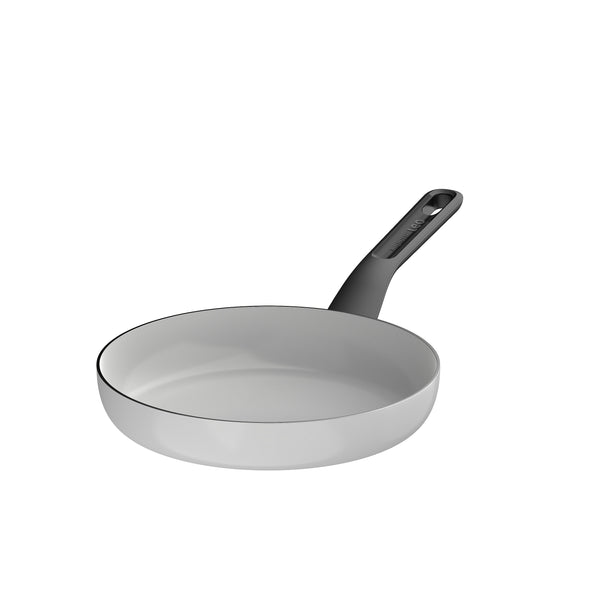
A dedicated pancake pan with a low edge is the easiest choice, because the turner slides under the pancakes without catching on the side. Size depends on how many people you cook for: a 24–26 cm pan takes two pancakes at a time, a 28 cm pan takes three. You will find suitable pans in our pans and tools for pancakes and in the wider range of pancake and omelette pans.
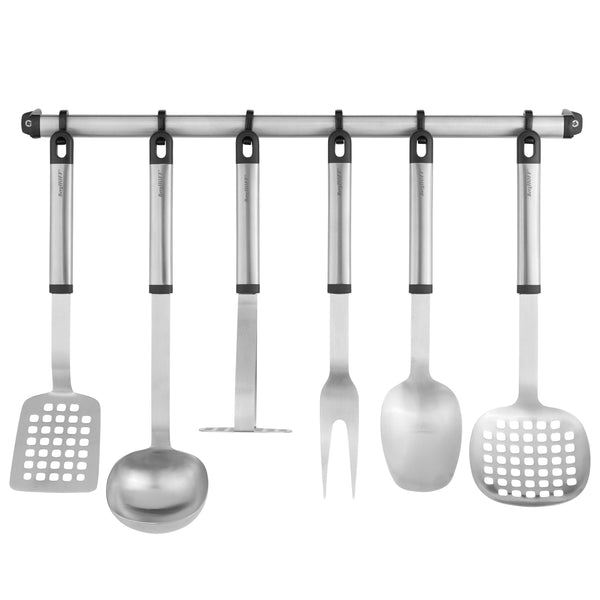
Two good examples: the Stone+ non-stick pancake pan 25 cm is made from recycled cast aluminium with a low side and a CeraGreen ceramic non-stick coating (PFAS-free according to the manufacturer), and it works on all hobs, including induction. If you usually cook for four, the Helix non-stick pancake pan 28 cm fits three pancakes at once. Its full disc base spreads the heat quickly and evenly, and it is also suitable for induction. For flipping, a flexible turner with a thin, wide blade slides under the pancakes without scratching the coating.
If you want to complete your kitchen, a frying pan set gives you several sizes for pancakes, eggs and everyday cooking.
Tips and common mistakes
- Overmixing the batter. Stir only until the flour disappears. Beating it smooth develops the gluten and makes the pancakes tough and flat instead of fluffy.
- A pan that is too hot. The outside burns before the inside is cooked. Medium heat is right when a drop of water sizzles gently and evaporates within a few seconds. On a hob with settings from 1 to 9, that is usually around 5 or 6. Induction hobs heat up quickly, so you may need to turn the heat down a notch after the first batch.
- Too much fat. A thin film wiped on with kitchen paper is all you need on a non-stick surface. Pools of butter fry the edges and leave the tops spotty.
- Flipping too early. Wait until the bubbles on top stay open and the edges look matt and set. If you flip too soon, the batter runs and the pancake loses height.
- Pressing the pancakes. Never press down with the turner after flipping. That pushes out the air that makes them fluffy.
- Stacking them on a cold plate. Pancakes go soggy when they steam on top of each other. Keep them in a single layer on a baking tray in the oven at 100 °C until everything is ready.
Do not worry if the first pancake is not perfect. It shows you whether the heat is right, so treat it as a test and adjust the heat before the next batch.
Variations
Buttermilk pancakes. This is the classic American version. Replace the milk with 350 ml buttermilk or a plain cultured milk such as kefir, reduce the baking powder to 2 teaspoons and add ½ teaspoon of bicarbonate of soda. The batter will be thicker, and the pancakes slightly tangier and even softer.
Blueberry pancakes. Pour the batter into the pan and scatter a few fresh or frozen blueberries over each pancake straight away. Adding them to the bowl turns the batter grey.
Chocolate chip pancakes. Sprinkle a few chocolate chips over each pancake before flipping, the same way as the blueberries.
Dairy-free pancakes. Use oat or soya drink instead of milk and neutral oil instead of butter. The pancakes will be a little less golden but just as soft.
What to serve with American pancakes
The classic way is a stack with a pat of butter and maple syrup poured over the top. Fresh blueberries, raspberries or sliced strawberries add freshness, and a spoonful of Greek yoghurt or whipped cream makes it more of a treat. For a savoury breakfast, serve the pancakes with crispy bacon and fried eggs, cooked in the same pan once the pancakes are done. Lingonberry jam is a good Nordic touch.
If you are still choosing a pan, read our pancake pan guide on size, coating and induction.
Frequently asked questions about American pancakes
Why are my American pancakes flat?
The most common reasons are overmixed batter, old baking powder or a pan that is not hot enough, so the batter spreads before it starts to set. Check the date on your baking powder, stir the batter only briefly and let the pan heat properly before you start.
Can I make the batter the night before?
It is better to make it fresh. Baking powder starts working as soon as it gets wet, and the batter loses some of its lift overnight. You can mix the dry ingredients the evening before and add the eggs, milk and butter in the morning.
How do I know when to flip a pancake?
Look at the top: small bubbles appear, pop and leave little holes that do not close again. The edges look dry and matt. Lift one edge with the turner; if the underside is evenly golden, it is time to flip.
Can I freeze American pancakes?
Yes. Let them cool completely, freeze them in a single layer and then transfer them to a freezer bag. Reheat them in a toaster, in a dry pan over low heat or in the oven at about 160 °C for a few minutes.
What is the difference between American pancakes and crêpes?
Crêpes are made from a thin batter without a raising agent and are cooked as large, thin rounds. American pancakes use a thick batter with baking powder, so they are smaller, much thicker and soft and fluffy inside.
The photo is illustrative and was created with AI.